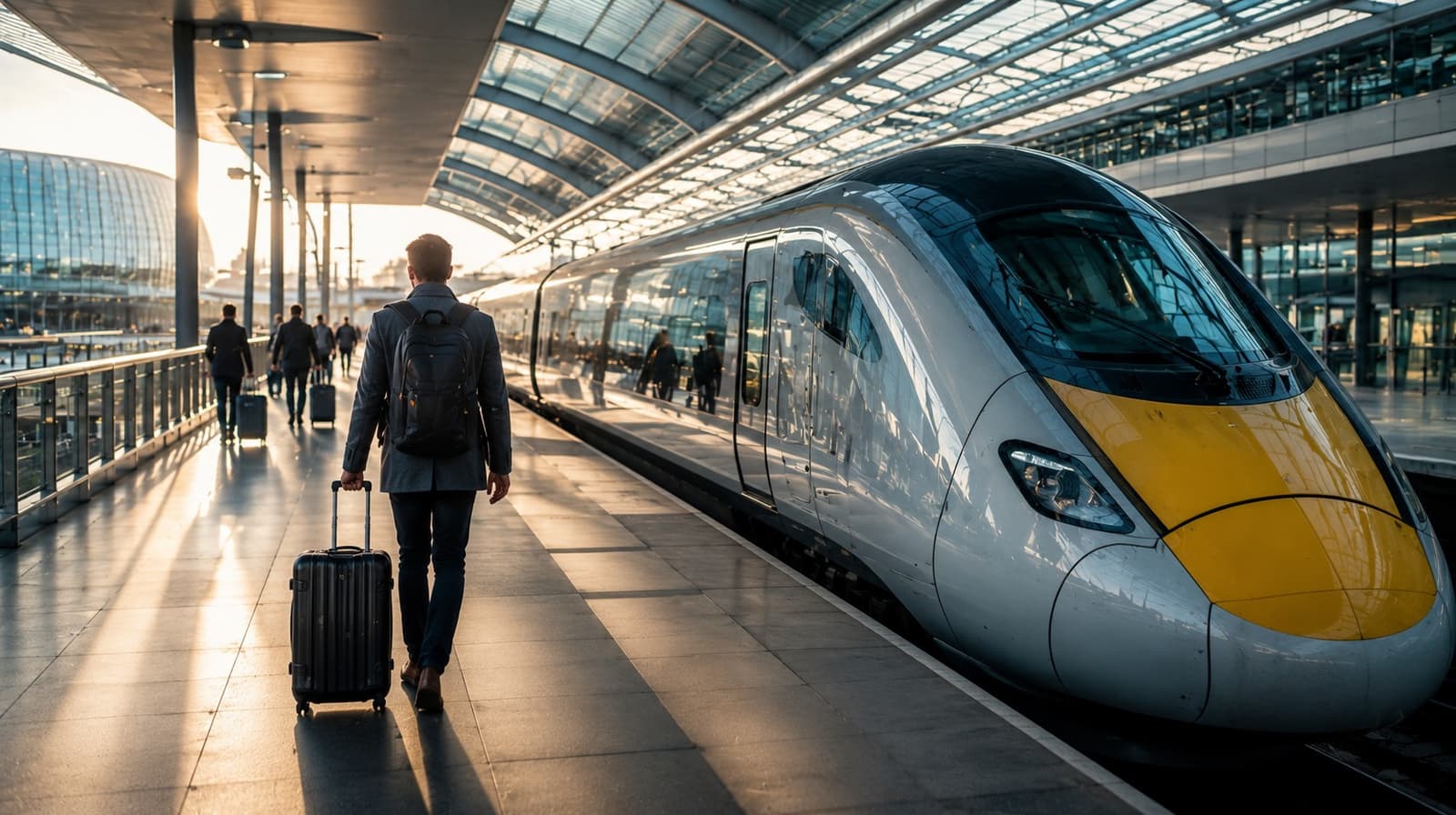
Corporate travel works best when the journey stops being wasted time and starts being useful time. That is the shift a chauffeur creates for a director heading into a 09:00 board meeting or a sales team crossing London between four client sites in a single afternoon. Westway Ride runs this service 24 hours a day, with fixed fares from £95 into central London, live flight tracking, free waiting time and meet and greet inside arrivals. The fleet ranges from a Mercedes E-Class to an S-Class VIP cabin, a V-Class for up to 7 and a 16-seat minibus for a whole team. This article looks at how a professional driver turns the back seat into a mobile office, protects your schedule, keeps sensitive conversations private, and simplifies the paperwork through a corporate account. Read on for the practical detail, then a set of frequently asked questions.
The back seat as a mobile office
Most business travellers lose the drive. They sit behind the wheel, watch the traffic, and arrive with nothing done. Put a chauffeur in the front and the rear cabin becomes a quiet room on wheels. You can answer email, take a call, read a brief, or rehearse the pitch you are about to deliver. The S-Class rear cabin gives you space to spread out documents; the E-Class keeps a single traveller comfortable and focused.
Our cars carry the practical kit that makes work possible in motion:
- Charging points so a laptop and phone stay alive across a long day.
- Onboard WiFi for the moments when hotel and office networks are out of reach.
- Climate control and low cabin noise so a video call sounds professional.
- Bottled water and a clean, settled space to think.
A 60-minute transfer from a west London hotel to the City stops being dead time. It becomes an hour of prep before the meeting or an hour of follow-up after it. Multiply that across a week of appointments and the maths starts to matter.
Productivity and recovered working hours
Think about the real cost of an executive's time. A senior manager on a full diary cannot afford three hours a day staring at brake lights. When a chauffeur handles the driving, those hours convert into billable work, considered decisions, or genuine rest before a demanding session.
Take a typical inbound trip. A visiting director lands at a London airport, clears the terminal, and faces a 45 to 75 minute road journey into town. Driving that stretch alone, jet-lagged, in unfamiliar traffic is both risky and unproductive. Sitting in the back, the same director reads the day's agenda, signs off two approvals, and walks into the office already briefed. The journey did work rather than costing it.
Rest counts as productivity too. A traveller who arrives calm performs better than one who arrives frazzled from a self-drive slog around the M25. That recovered energy shows up in the meeting that follows.
Punctuality and reliability you can plan around
Late arrivals damage deals and reputations. A chauffeur service exists to remove that risk, and it does so through a few dull but vital habits. Drivers plan routes before they set off, watch traffic conditions in real time, and build a margin into every collection so a single blocked road does not sink the appointment.
For flights, live tracking does the heavy lifting. If a plane lands 40 minutes early or an hour late, the driver already knows and adjusts the pickup. You are not standing at a rank while a booking sits waiting on the wrong side of the terminal. Reliability comes from these overlapping safeguards:
- Route planning that accounts for roadworks, events and rush hour.
- Flight tracking that resets the collection time automatically.
- Buffer time built into pickups for airport and cross-city runs.
- A 24-hour operation, so an 04:30 departure gets the same care as a midday one.
The result is simple. You give a meeting time; the service works backwards from it. For a Heathrow chauffeur service run into the City, that means your driver is inside arrivals with a name board while your phone is still switching off aeroplane mode.
Discretion and confidentiality for client-facing executives
Business talk does not pause at the car door. Deal terms, hiring plans and legal positions all get discussed in transit, and a professional driver understands the weight of that. Discretion is part of the job, not an extra. What is said in the cabin stays there.
This matters most for people who deal with clients, investors and the press. An executive can take a sensitive call without wondering who is listening or repeating it later. The privacy glass on an S-Class and the settled, unhurried manner of an experienced chauffeur both signal the same thing: this is a safe space to keep working. For visiting VIP guests, that same discretion protects your firm's relationship with them, which is often the whole point of sending a car in the first place.
Consistency for visiting directors and VIP guests
When a company flies in a board member or a key customer, the ground experience becomes part of the welcome. A chauffeur service delivers that consistently. The same standard of vehicle, the same courteous greeting, the same clean cabin, whether the guest arrives on a Tuesday morning or a Sunday night.
Consistency also means the person on the ground knows the drill. They handle luggage without being asked, they know the fastest way to the office in current traffic, and they treat the guest as the priority. Compare that with a guest hailing a random cab and guessing at the fare. One version says your company has its act together. The other leaves an impression you cannot easily undo.
Business accounts, one contact and consolidated billing
The admin side of corporate travel eats hours if you let it. Individual receipts, personal cards, expense claims chased weeks later. A corporate account with Westway Ride replaces all of that with a single arrangement. Bookings run through one point of contact, and every journey lands on a consolidated monthly invoice.
The practical wins stack up quickly:
- Booking through one team who already know your firm's preferences.
- Billing on a single monthly statement instead of scattered receipts.
- Recording every trip with clear detail for expense and finance records.
- Removing the need for travellers to pay upfront and claim back later.
Finance teams get clean data they can reconcile in minutes. Executive assistants get a number they can call at any hour and a driver they trust. And the traveller simply gets in the car, because someone else has already handled the rest.
Fixed fares versus surge, and why budgeting improves
App-based rides swing with demand. A fare that reads £40 at 10:00 can read £110 during a downpour or a rail strike, and that unpredictability makes travel budgets almost impossible to hold. A chauffeur company quotes a fixed fare before the journey and honours it. Rain, traffic and time of day do not move the number.
For a finance manager, that predictability is worth a great deal. Airport transfers, cross-London meetings and multi-stop days can all be priced in advance and signed off without a nasty surprise on the statement. Free waiting time adds to the certainty: a flight delay does not trigger a meter running against you. The cost you agree is the cost you pay, which makes forecasting travel spend a genuine exercise rather than a guess.
Roadshows, multi-stop days and cross-London meetings
Some business days are not a single trip; they are a sequence. An investor roadshow might cover six meetings across the West End, the City and Canary Wharf between 08:00 and 18:00. Doing that by public transport or a string of separate taxis wastes the whole day in transit and connection gaps.
A chauffeur assigned for the day changes the shape of it. The car waits between stops, so there is nowhere to queue and nothing to rebook. Bags, coats and samples stay in the vehicle. The driver holds the running order and adjusts it live when a meeting overruns. For teams, a V-Class carries up to 7 together, and the 16-seat minibus moves a full group to an offsite or a client dinner without splitting everyone across three vehicles. The day flows because the transport stops being a series of decisions.
Airport transfers and duty of care
Airports are where most corporate journeys begin or end, and Heathrow sits about 15 miles west of central London across Terminals 2, 3, 4 and 5. Meet and greet inside arrivals means a tired traveller is met by name rather than left to find a rank. Live flight tracking and free waiting time cover the delays that airports produce so reliably.
There is a safety dimension companies increasingly take seriously. Duty of care means an employer is responsible for staff wellbeing while they travel on business. A vetted, professional driver in a licensed vehicle answers that responsibility far better than a jet-lagged employee driving a hire car at midnight or getting into an unbooked minicab. Westway Ride operates under TfL Private Hire Operator Licence 73850301, so every journey sits inside a regulated, accountable framework. For a company, that is both a moral point and a practical one.
Ready to make corporate travel work harder for your business? Contact Westway Ride to set up a corporate account with one point of contact, consolidated monthly billing and fixed fares across every journey. Book a single transfer or a full roadshow day, any hour, and let the drive become useful time.
Does a chauffeur service actually improve corporate travel productivity?
Yes. A chauffeur frees the traveller from driving, which turns a 45 to 75 minute transfer into working or resting time. Over a busy week that recovers several hours a senior employee would otherwise spend in traffic, and it lets them arrive prepared rather than drained.
What is a corporate chauffeur account?
A corporate account is a business arrangement that lets a company book journeys through one point of contact and settle them on a single consolidated monthly invoice. It replaces individual receipts and expense claims with clean, itemised records, and removes the need for travellers to pay upfront.
What do you get inside the car for working on the move?
You get the tools of a mobile office. These include charging points, onboard WiFi, climate control, low cabin noise and a quiet space to spread out documents. Together they let you take calls, answer email and prepare for a meeting during the journey rather than losing that time.
Is a chauffeur better than a taxi app for business travel?
A chauffeur wins for business use. The fare is fixed and quoted in advance, the driver tracks your flight and greets you inside arrivals, and the same standard repeats every trip. A taxi app offers none of these reliably and its price surges with demand, which makes budgeting harder.
How does fixed pricing help a travel budget?
It removes surprises. A fixed fare is agreed before the journey and does not change with traffic, weather or time of day. Finance teams can price airport transfers and cross-London meetings in advance, and free waiting time means a delayed flight will not add unexpected charges.
Can a chauffeur handle a multi-stop roadshow day?
Yes. A car can be booked for the full day, waiting between meetings across the West End, the City and Canary Wharf. The driver holds the running order, adjusts it when a session overruns, and keeps bags and materials secure in the vehicle so nothing needs rebooking between stops.
What vehicles suit different corporate needs?
The right car depends on the group and the occasion. The main options are: the Mercedes E-Class for a single traveller, the S-Class for VIP rear-cabin comfort, the V-Class for up to 7, the Range Rover for a commanding presence and a 16-seat minibus for a full team. Each covers a distinct business scenario.
How does a chauffeur keep business conversations confidential?
Confidentiality is treated as part of the professional standard. A trained driver keeps what is said in the cabin private, and vehicles such as the S-Class add privacy glass. This lets a client-facing executive take a sensitive call or discuss deal terms in transit without concern.
What does duty of care mean for corporate travel?
Duty of care is an employer's legal and moral responsibility for staff wellbeing while they travel on business. Using a vetted driver in a licensed vehicle meets that duty far better than asking a tired employee to drive a hire car or take an unbooked minicab late at night.
How do you make sure I am not late for a meeting?
The service works backwards from your meeting time. Drivers plan the route in advance, monitor live traffic, build buffer time into every pickup, and track flights so an early or late landing resets the collection automatically. The operation runs 24 hours, so early departures get the same care.
Which airport terminals do you cover for Heathrow business trips?
All of them. Westway Ride covers Heathrow Terminals 2, 3, 4 and 5, with meet and greet inside arrivals, live flight tracking and free waiting time. Heathrow sits about 15 miles west of central London, a road journey of 45 to 75 minutes depending on traffic.
Can a chauffeur move a whole team, not just one executive?
Yes. Groups travel together rather than splitting across separate cars. A V-Class seats up to 7 for a small team, and a 16-seat minibus carries a larger group to an offsite, a conference or a client dinner, keeping everyone on the same schedule.
How much does a corporate chauffeur journey cost?
Fares start from £95 into central London and are fixed before you travel. The exact figure depends on distance, vehicle and route, but you receive the price in advance, and free waiting time means airport delays do not add to it. Corporate accounts consolidate every journey onto one monthly invoice.
Is the service available outside normal office hours?
Yes, 24 hours a day. Business travel rarely fits a nine-to-five pattern, so a 05:00 airport run or a late return after a client dinner gets the same driver standard and the same reliability as a midday city transfer.