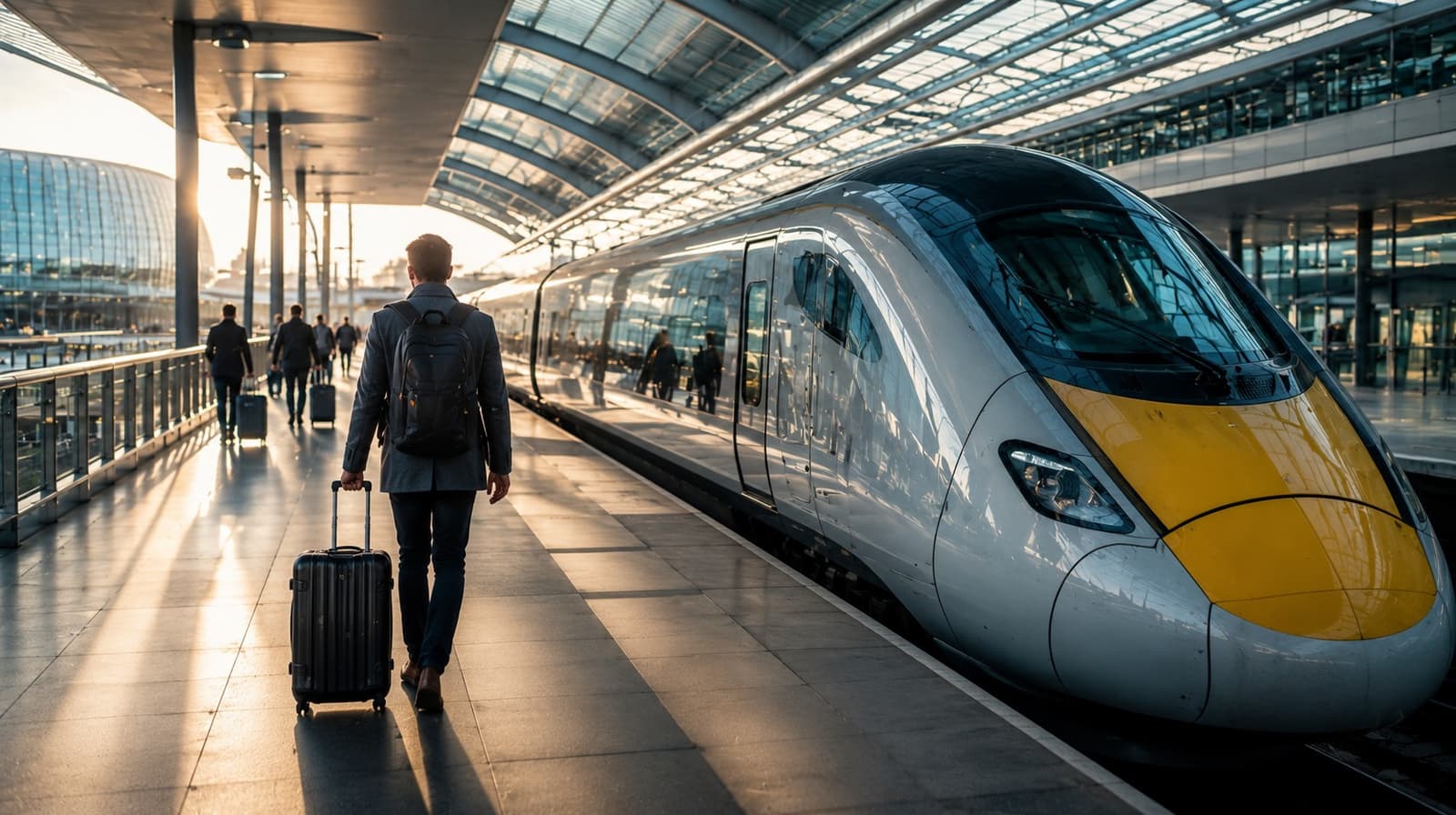
Peak summer travel through Heathrow means moving through one of Europe's busiest airports during the six weeks when it carries the most passengers of the year. Late July and August are the crush: school holidays start, families fly out together, and the August bank holiday stacks another wave on top. Heathrow sits about 15 miles west of central London, with four terminals (2, 3, 4 and 5) feeding off the M4 and the M25, and in these weeks the road can take anywhere from 45 to 75 minutes rather than the quieter 45. This article covers the busiest dates and why they bite, how to time a pickup around holiday traffic, why larger vehicles sell out, and a checklist you can actually use. Westway Ride runs 24 hours, so the timing advice below applies whether your flight leaves at 06:00 or lands at 23:30.
Why late July and August put Heathrow under load
The pressure is seasonal and predictable. English and Welsh schools break up in the third week of July, so the last Friday of that month and the first two weeks of August become the departure spike. Add the August bank holiday weekend, when a lot of people take a short trip on top of the main summer break, and you have roughly six weeks where terminals run near capacity from dawn.
A few things happen at once during these weeks:
- Leisure passengers replace business travellers, and leisure groups check more bags, which slows every desk.
- Long-haul and short-haul peaks overlap, so security queues that normally stagger through the day bunch together.
- First-time or once-a-year flyers move slower through the airport, which lengthens dwell time inside each terminal.
None of that is a reason to panic. It's a reason to plan the ground half of your journey with the same care you gave the flight. The airport being full is a known quantity, and a known quantity can be worked around.
The two daily peaks: morning departures and afternoon arrivals
Heathrow has two rushes, and they behave differently. Departures peak in the early morning, roughly 05:00 to 08:00, when transatlantic and long-haul flights push off and the security halls fill before most of London has had breakfast. Arrivals build through the afternoon and into the evening, so the baggage belts, immigration halls and forecourts are busiest from about 15:00 onward.
What that means for your pickup time is simple. If you're flying out, the enemy is the queue inside, so you want to be dropped early with margin to spare. If you're landing, the enemy is the crowd at the kerb and the wait for bags, so the value is a driver who already knows your flight is on the ground and meets you without a scramble for the phone.
In peak weeks these two waves stop being separate. A morning departure surge can still be clearing while the first afternoon arrivals roll in, and the forecourt roads never fully empty. Plan for the airport to be busy at any hour rather than only at the classic pinch points.
Timing the pickup around holiday traffic on the M4 and M25
The road to Heathrow is short in miles and long in variance. A clear run from central London is about 45 minutes. In peak-season holiday traffic, with the M4 loaded and the M25 stacking near the airport spur, the same trip can stretch to 75 minutes. The difference between those two numbers is the whole game.
So build the margin in. For a morning departure we recommend leaving earlier than a normal weekday, because the M4 fills sooner in the school holidays and roadworks are common through summer. For an afternoon or evening return, expect the last few miles around the M25 junctions to crawl. A good chauffeur watches live conditions and picks the route on the day rather than committing to one road out of habit.
- Give a departure pickup a wider cushion than you would in term time.
- Confirm the terminal before you set off, because a summer schedule change can move an airline.
- Share your flight number so the driver can track delays and reshape the timing.
Free waiting time and live flight tracking come as standard on every Westway Ride transfer, which takes the sting out of a flight that shifts by an hour. The point of timing well isn't to shave minutes. It's to remove the scenario where a full motorway turns a comfortable buffer into a sprint through the terminal.
Terminal congestion, drop-off zones and full car parks
Inside the airport, the summer crush shows up first at the kerb. Heathrow's drop-off forecourts charge per visit and get tight in peak hours, so a driver circling for a gap costs you time you didn't budget. Short-stay car parks fill early on the busiest mornings, and the walk from an overflow space with a full luggage trolley is nobody's idea of a smart start.
This is where a proper chauffeur earns the fare. With meet and greet included, your driver parks and comes to you, so you aren't hunting the forecourt or dragging cases across a packed car park. For arrivals, the driver is inside waiting when you clear customs, which matters most on the evenings when the halls are heaving.
Each terminal has its own quirks in peak season. Terminal 5 handles the British Airways long-haul wave and gets busy early. Terminals 2 and 3 sit together in the central area and share congested access roads. Terminal 4 is separate to the south and easy to reach the wrong way if you don't know it. Knowing which building you actually need, and confirming it before departure, saves the worst of the summer forecourt chaos.
Book ahead, because demand and larger vehicles sell out
Here's the part people leave too late. In the busiest fortnight of August, chauffeur availability tightens the same way flights and hotels do. The larger vehicles go first: a V-Class that seats up to 7, a Range Rover, and the 16-seat minibus are in the shortest supply exactly when families and groups want them. If you wait until the week of travel to book a seven-seater for a family of five with a summer's worth of luggage, you may find only smaller cars left.
Booking early does two things. It locks the vehicle you actually need, and it locks the fare before demand climbs. For peak-season travel we'd suggest confirming as far ahead as you can, and certainly not leaving a large-group booking to the final days. If you already know your Heathrow dates, a fixed booking now is worth more than a better guess later. For a full walkthrough of how the airport service works, see our Heathrow chauffeur service.
Fixed fares versus summer surge pricing
App-based rides use dynamic pricing, which is a polite way of saying the price climbs when everyone wants a car at once. Peak summer weekends are precisely when that happens, and a fare that looked fine on a quiet Tuesday can double on a Friday evening in August. You find out at the worst moment, standing at the kerb with your bags.
Westway Ride quotes a fixed fare that's agreed when you book and doesn't move with demand, weather or traffic. A Mercedes E-Class starts from £95 to central London, and that number is the number whether the M4 is clear or crawling. There's no meter anxiety and no holiday premium bolted on at the door. In the weeks when surge pricing is at its most aggressive, a price that was settled in advance is the calmer choice.
Arrivals, delays and free waiting time
Summer schedules slip. Air traffic control delays, knock-on effects from busy European hubs, and long taxi times at a full airport all push arrivals back. If your fare depended on landing on time, a delay would be a problem. It doesn't here.
Every transfer includes live flight tracking, so the driver watches your actual landing time and adjusts. Free waiting time means a late flight or a slow bag hall doesn't trigger extra charges while you're still inside. The driver waits, meets you, and you leave when you're ready rather than when a clock says so. On the evenings when arrivals stack up, that's the difference between a relaxed pickup and a stressful one. You're not being billed for problems the airport created.
Families and groups in the busiest weeks
Peak season is family season, and families travel heavy. Pushchairs, holiday luggage, and children who don't want to queue all make the airport harder. The right vehicle turns that around. A V-Class carries up to 7 with room for the cases, a Range Rover suits a smaller family that still wants space and comfort, and the 16-seat minibus keeps a larger party together in one vehicle rather than split across two cars that arrive at different times.
For groups, one booking beats several. Everyone leaves together, arrives together, and there's a single fixed fare instead of a scramble of separate rides at surge prices. Book the size up if you're unsure, because in August the smaller-then-swap approach rarely works when the fleet is fully committed.
A practical peak-season checklist
Run through this before you travel in late July or August:
- Book as early as you can, especially for a V-Class, Range Rover or 16-seat minibus.
- Confirm your terminal the day before, because summer schedule changes happen.
- Give a departure pickup a wider time cushion than a term-time trip would need.
- Share your flight number so live tracking can reshape the timing around delays.
- Choose a fixed fare so a busy weekend can't inflate the price at the kerb.
- Pick the vehicle one size up if your luggage or group is borderline.
Do those six things and the busiest weeks stop being a gamble. The airport will still be full. Your ground journey won't be the thing that goes wrong.
Is late July really the busiest time to fly from Heathrow?
Yes. The last week of July and the first two weeks of August are the peak, because school holidays begin and families travel together. Add the August bank holiday and you get roughly six weeks of near-capacity days, with the morning departure rush filling security halls from around 05:00.
What is peak summer travel at Heathrow?
Peak summer travel is the six-week stretch across late July and August when Heathrow carries its highest annual passenger volume. It's driven by school holidays, leisure groups replacing business travellers, and the August bank holiday, and it shows up as longer queues inside terminals and heavier traffic on the M4 and M25.
Do departures and arrivals peak at the same time of day?
No. Departures peak early morning, roughly 05:00 to 08:00, while arrivals build through the afternoon and into the evening. In the busiest summer weeks the two waves overlap, so the forecourts and access roads stay busy at almost any hour rather than only at the classic rush points.
Which vehicles suit a family or group in peak weeks?
The V-Class, Range Rover and 16-seat minibus are the group options. The V-Class carries up to 7 with luggage, the Range Rover suits a smaller family wanting space, and the minibus keeps a party of up to 16 together in one vehicle. All three sit within Westway Ride's fleet alongside the E-Class and S-Class.
Should I book my chauffeur weeks ahead for an August trip?
Yes, especially for a larger vehicle. Seven-seaters, Range Rovers and the minibus sell out first in peak weeks, and booking early locks both the vehicle and the fare before demand climbs. Leaving a large-group booking to the final days is the most common way to end up with only smaller cars available.
What is a fixed fare?
A fixed fare is a price agreed at the time of booking that doesn't change with traffic, weather or demand. Westway Ride quotes it up front, so an E-Class from £95 to central London stays £95 whether the M4 is clear or crawling. There's no meter and no summer premium added at the kerb.
Fixed fare or surge pricing: which is better in peak weeks?
A fixed fare wins in peak weeks. App surge pricing climbs exactly when demand spikes, which in summer is every busy weekend, and you find out the cost while standing with your bags. A fare settled in advance removes that risk entirely, so you know the price before you travel rather than after.
Do you charge extra if my flight is delayed?
No. Live flight tracking and free waiting time come as standard, so the driver follows your actual landing time and waits without adding charges. A delayed flight or a slow bag hall in a busy summer arrivals hall doesn't cost you more. You leave when you're ready.
What is meet and greet?
Meet and greet is a service where the driver parks and meets you in person rather than waiting at the kerb. For arrivals the driver is inside as you clear customs; for departures you're dropped without circling a full forecourt. It's included on every transfer, which matters most on the busiest peak-season evenings.
Are Friday and Sunday evenings the tightest for Heathrow traffic?
Yes. Friday and Sunday evenings are the hardest to time, because weekend leisure demand and returning arrivals stack onto the M25 near the airport spur. In peak season the last few miles can crawl, so those slots need a wider time cushion than a midweek pickup.
M4 or M25: which route is faster in holiday traffic?
It depends on the day, which is why the driver decides on the day. The M4 is the direct approach from central London and the M25 links the wider network, and either can be the slower of the two in peak-season traffic. A chauffeur watching live conditions picks the better route rather than committing to one road by habit.
What is free waiting time?
Free waiting time is an included allowance where the driver waits at no extra cost while you clear the terminal. Paired with live flight tracking, it means a late arrival or a long queue at immigration doesn't start a charge. The driver stays until you're through and ready to go.
Can you handle a 16-passenger group during August?
Yes, with the 16-seat minibus. It keeps a full party together in one vehicle at a single fixed fare, rather than splitting across cars that arrive separately. Because larger vehicles are in shortest supply in peak weeks, book the minibus as early as your dates allow to secure it.
How far ahead of a peak-season flight should the pickup be?
Earlier than a term-time trip. A clear run from central London is about 45 minutes, but peak holiday traffic can stretch it to 75. Give a morning departure a wider cushion, share your flight number for tracking, and confirm the terminal the day before in case a summer schedule change has moved your airline.