The Boat Race is the annual rowing contest between Oxford University Boat Club and Cambridge University Boat Club, rowed on the tidal Thames in west London over a course of four miles and 374 yards. It began in 1829 at Henley, moved to London as the city grew, and has been rowed on the same stretch of water between Putney and Mortlake since 1845. It is one of the oldest sporting fixtures in the world and it remains free to watch from the bank.
Two things make it unlike any other event in the London calendar. The first is that it is genuinely open. There is no ticket, no enclosure and no fee, and several hundred thousand people line a public towpath to watch. The second is that it is short. The crews take somewhere around seventeen to twenty minutes to cover the course, and they pass any given point in a handful of seconds. So the entire question of whether you enjoy the day comes down to where you decide to stand.
The Women's Boat Race, first rowed in 1927, has been held on the same course on the same day since 2015, so a single afternoon now gives you both races. This guide covers what the race is, how the Championship Course works, why the tide dictates the start time, what the coin toss actually decides, and then walks the course from the start at Putney Bridge through Hammersmith, Chiswick Eyot and Barnes to the finish at Mortlake, with an honest assessment of each viewing spot. It closes on the practical problem of reaching a riverbank where the roads are shut. Westway Ride holds Transport for London licence 73850301.

The Championship Course
The course runs from Putney to Mortlake, upstream, on the tidal Thames known as the Tideway. Four miles and 374 yards, which is about 6.8 kilometres, and it has been the setting since 1845. It is not a straight line, and that is the whole point of it as a sporting contest.
The river bends twice, substantially. It curves first towards the Middlesex bank on the north side, then swings into a long sweep favouring the Surrey side on the south, before straightening for the run to the finish. Because the crews race side by side rather than in lanes, the inside of a bend is worth real distance, and the advantage changes hands as the river turns. A crew can be ahead at Hammersmith and lose it on the Surrey bend.
That shifting advantage is why the race is rarely decided early and why the middle section is often the most interesting to watch. It also explains why the start is preceded by a coin toss that matters more than a coin toss usually does. Before any of that, though, the river itself sets the timetable.
The tide decides the start time
The Tideway is tidal, which sounds obvious and is the most consequential fact about the day. The race is rowed on the flood tide, with the incoming water pushing the crews upstream, because rowing four miles against the Thames would be slower, uglier and less safe.
So the start time is set by the moon rather than by television. This is why the Boat Race can be at 14:00 one year and well into the evening another, and why the date moves around late March and early April. Check the time before you plan anything around it, because it is not a fixed slot in the way most sporting fixtures are.
The tide also means the crews are moving faster than they look, and that the window in which anything happens at your chosen spot is brief. Which is the case for choosing that spot carefully, and for understanding what the umpire and the coin decide before the crews even start.
The stations, and what the coin toss decides
Before the race, the two club presidents toss a coin, and the winner chooses a station: Surrey or Middlesex. That choice is a genuine tactical decision rather than a formality, because the two sides of the river offer different advantages at different points of the course.
Middlesex, the north bank, has the better of the opening stretch as the river bends that way out of Putney. Surrey, the south bank, holds the long middle bend, which is the biggest single advantage on the course. So the toss is a bet: take the early bend and try to establish a lead you can defend, or take the later one and accept being behind at Hammersmith.
An umpire follows the crews in a launch and can warn coxes who steer into their opponent's water, since with no lane markers the boats race in open river and the steering is part of the contest. Clashes happen. With that understood, the course itself is best walked from the beginning.
Putney Bridge and the start
Putney is where the day begins and where the atmosphere is thickest. The crews boat from the clubs along the Putney Embankment, and the hour before the start is the only part of the day where you see the rowers up close rather than as distant figures in a shell. The boathouses are right there. So is the crowd.
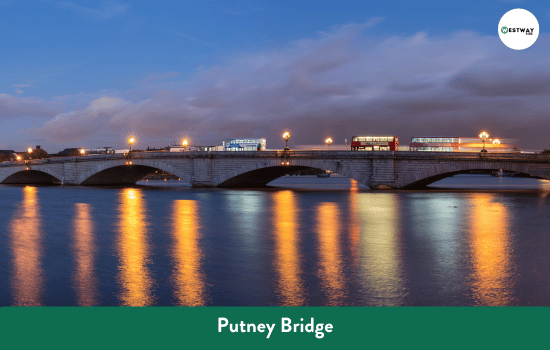
The honest trade-off is this: Putney gives you the best build-up and the worst race. You see the boats for the first thirty seconds and then they are gone upstream and you are watching a screen like everyone else. But the pubs are good, the embankment is lively, and if you want the sense of occasion rather than the sport, this is where it lives.
It is also the busiest point on the course by a distance, so arrive early or do not bother. The next landmark is where the race usually starts to take shape.
Hammersmith Bridge
Hammersmith is roughly the halfway point and it is where the race often turns. By the time the crews reach the bridge, the early Middlesex advantage has played out and the long Surrey bend is beginning, so a lead built in the first two minutes starts coming under pressure exactly here.
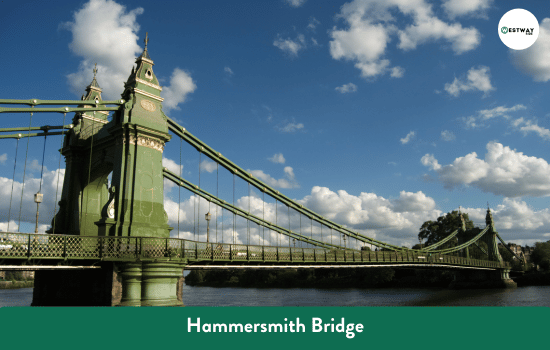
The riverside at Hammersmith is one of the better places to watch, with the terrace pubs along the Lower Mall and a stretch of towpath that gives a decent view up and down the river rather than just across it. You get more than a glimpse, which Putney cannot promise. The crowd is serious but less crushed than the start.
Access to the bridge itself has been restricted in recent years, so check the current position rather than assuming you can stand on it. Beyond Hammersmith the river opens out and passes a small island that most spectators have never heard of.
Chiswick Eyot
Chiswick Eyot is a small wooded island in the Thames just above Hammersmith, and it marks the stretch where the Surrey bend does its work. This is the quiet part of the course and, for anyone who actually wants to watch rowing, one of the best.
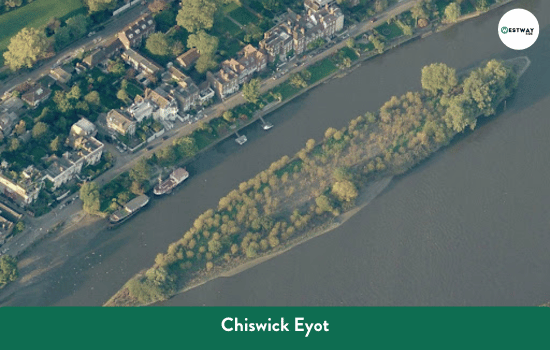
The crowds thin here compared with Putney and Hammersmith, the towpath along Chiswick Mall is open, and you get a long clear view of the boats coming towards you rather than three seconds of them crossing your eyeline. If a crew is going to break the other, it frequently happens on this stretch, so the racing you see is the racing that matters.
The drawback is that Chiswick Mall floods on a spring tide, which is worth remembering given the race is rowed on a rising one. Wet feet are a genuine possibility. Further up, the last bridge on the course gives the best value of the day.
Barnes Bridge
Barnes Bridge is the last crossing before the finish and, for my money, the smartest place to stand. By this point the race is usually decided or very nearly so, the crews are approaching the end of four miles at full effort, and you see them at the moment the result becomes real.
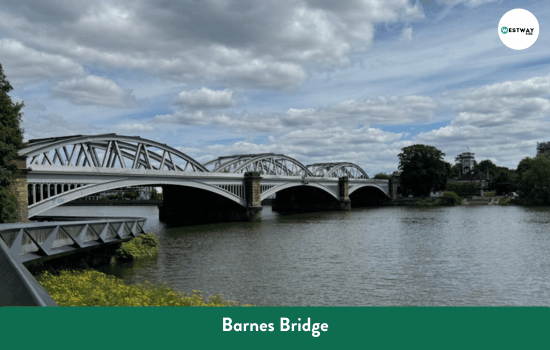
The crowd here is a fraction of Putney's and the view is better. The towpath along the Surrey bank gives a long approach view, and the terrace at Barnes has the feel of a village watching something rather than a city descending on it. If you are bringing family, or anyone who would rather not be crushed, this is the recommendation.
From Barnes it is a short run to the end, where the day concludes in the least dramatic place on the course.
Mortlake and the finish
The finish sits just before Chiswick Bridge at Mortlake, marked by a stone on the Surrey bank, and it is a curiously understated place for the end of a famous race. There is no grandstand and no finishing straight full of spectators. There is a post, a river, and a crew collapsing over their oars.
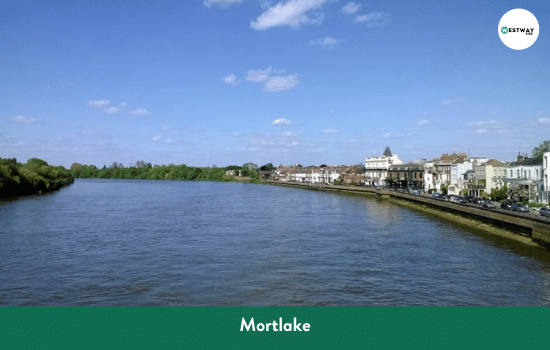
Watching from Mortlake gives you the result first hand and the exhaustion up close, which is the honest currency of the event. What it does not give you is much of a race, since by the finish the outcome is usually settled. The pubs at Mortlake and Chiswick are the compensation, and they are good ones.
Wherever you choose along those four miles, the same practical problem applies, and it is the one that catches people out every year.
Getting there when the roads are closed
The riverside roads close. That is the thing to plan around. Putney Embankment, the Lower Mall at Hammersmith, Chiswick Mall and the approaches at Barnes and Mortlake all see closures and heavy pedestrian management on race day, and the stations nearest the good spots are small suburban ones that were not built for a crowd of this size. Putney Bridge and Hammersmith are workable. Barnes and Mortlake are single-platform affairs that struggle.

Driving yourself is the worst option available. Parking near the course on race day ranges between impossible and expensive, residents' bays are enforced, and you will spend the twenty minutes of the race looking for a space. Being dropped a short walk from your chosen stretch and collected afterwards from an agreed point away from the closures solves it, and it means you can watch from Barnes and be in central London for dinner without a two hour epilogue.
For sporting fixtures where the venue is a four mile riverbank rather than a stadium, race day and sporting event transport is built around the closures. If you want the whole day, including a pub lunch before and dinner after, a car and driver for the full day keeps everything in one booking and your coats in the boot.
Making a day of it
The race is twenty minutes, so the day needs more than the race. The good news is that the course runs through some of the best riverside in London, and the pubs along it are the real institution: the Blue Anchor and the Dove at Hammersmith, the terraces at Barnes, the Putney Embankment bars. Book if you want a table, because everyone else has had the same idea.
The other approach is to make it a two university weekend, which people do more often than you might think. The race is the London end of a rivalry that lives elsewhere, and both cities are an easy run from London. Our guide to Oxford and our piece on days out in Cambridge cover the colleges, the punting and the rest of it.
Whatever shape the day takes, decide your viewing spot before you leave rather than after you arrive. It is the one decision that cannot be fixed on the day.
What is the Boat Race?
The Boat Race is the annual rowing contest between Oxford University Boat Club and Cambridge University Boat Club, first held in 1829. It is rowed on the tidal Thames in west London over four miles and 374 yards, and it is one of the oldest sporting fixtures anywhere in the world.
Is the Boat Race free to watch?
Yes. The race is entirely free from the public towpath and the riverside along the whole course. There is no ticket and no enclosure, which is unusual for an event of its size. Paid hospitality exists at some riverside venues and clubs, but nobody needs it to watch the race.
Where does the Boat Race start and finish?
It runs from Putney to Mortlake, upstream on the Championship Course, finishing just before Chiswick Bridge. The course has been used since 1845 and passes Fulham, Hammersmith Bridge, Chiswick Eyot and Barnes Bridge on the way.
How long does the Boat Race take?
Roughly seventeen to twenty minutes for the crews to cover the four miles and 374 yards. At any single point on the bank the boats are in view for only a few seconds, which is why the choice of viewing spot matters far more than arriving early does.
What is the Championship Course?
The Championship Course is the four mile 374 yard stretch of the tidal Thames between Putney and Mortlake used for the Boat Race since 1845. It bends twice, first towards the Middlesex bank and then into a long sweep favouring Surrey, and those bends are what make the race a tactical contest rather than a straight sprint.
Why does the start time change every year?
Because the race is rowed on the flood tide, with the incoming water carrying the crews upstream. The tide is set by the moon, not by broadcasters, so the start time shifts year to year and can fall anywhere from early afternoon to evening. The date moves around late March and early April for the same reason.
Which are the best places to watch the Boat Race?
Barnes Bridge, Chiswick Eyot, Hammersmith and Putney are the four main options, and they suit different people. Putney has the best atmosphere and the worst view. Hammersmith catches the race turning. Chiswick Eyot is quiet with a long clear view. Barnes Bridge gives you the finish shaping up with a fraction of the crowd.
What does the coin toss decide?
It decides the choice of station, Surrey or Middlesex. The winning president picks a side of the river, and the choice is tactical rather than cosmetic: Middlesex favours the early bend out of Putney, while Surrey holds the long middle bend that is the biggest advantage on the course.
Do the women race on the same day?
Yes. The Women's Boat Race, first rowed in 1927, has been held on the same Championship Course on the same day since 2015. Before that it was raced separately at Henley. A single afternoon on the bank now gives you both races.
Do roads close for the Boat Race?
Yes. Putney Embankment, Chiswick Mall, the Lower Mall at Hammersmith and the approaches at Barnes and Mortlake all see closures and pedestrian management on race day. Parking near the course is effectively unavailable, which is why driving yourself is the least practical way to attend.
Is it better to drive or be dropped off at the Boat Race?
Being dropped off is clearly better. Riverside parking on race day is either impossible or costly, residents' bays are enforced, and the closures mean a long walk anyway. A drop-off near your chosen stretch and a collection afterwards from an agreed point away from the crowd removes the whole problem.
Can I watch from Hammersmith Bridge itself?
Check first, because access to Hammersmith Bridge has been restricted in recent years due to its condition. The riverside at Hammersmith, including the Lower Mall and its terrace pubs, remains one of the better viewing stretches regardless of whether the bridge deck is open.