Driving from the UK to France begins with a short Channel crossing from Dover, either the 35-minute LeShuttle train through the tunnel or a ferry to Calais, and opens onto a country built for the road trip, from the D-Day beaches of Normandy to the lavender of Provence and the glamour of the Riviera. London to Paris is roughly six to seven hours of driving plus the crossing, but the joy of going by car rather than the train is that the journey itself becomes the holiday, with the freedom to follow the coast, detour to a chateau, and stop wherever the view demands it. This guide traces a scenic route south through the regions worth slowing down for, then covers the practical and legal essentials, which changed considerably after Brexit and again in 2026, so that the only surprises on your trip are the good ones. For those who would rather watch the scenery than the road, a long-distance chauffeur service can drive the whole route door to door.
Planning Your Route Across the Channel
The crossing is the first decision, and the two options suit different travellers. LeShuttle, the car-carrying train through the Channel Tunnel, is the fastest, loading your car at Folkestone and delivering it to Calais in about 35 minutes, with you staying in the vehicle the whole way. It runs frequently around the clock and is the choice when you want to maximise driving time on the French side.
The ferry from Dover to Calais takes around 90 minutes and trades speed for an experience, letting you stretch your legs on deck, eat a meal, and watch the white cliffs recede and the French coast appear. Both arrive at Calais, the natural gateway for a southbound trip, and both should be booked ahead in peak season. Once you roll off onto French tarmac, the coast road and the autoroute south both beckon, and the first landmark is behind you before you have even left England.
How long you give the trip shapes everything else. A long weekend suits Calais, the Normandy coast, and perhaps Paris, while a fortnight opens the whole route to the Riviera and Provence with time to linger. Decide in advance whether the goal is a single destination, with the drive a means to reach it, or a touring holiday where the stops are the point, because that choice determines whether you take the fast autoroutes or the slower, prettier national roads. Either way, a loose plan with room for the unplanned detour is the spirit of a French road trip.
The White Cliffs of Dover
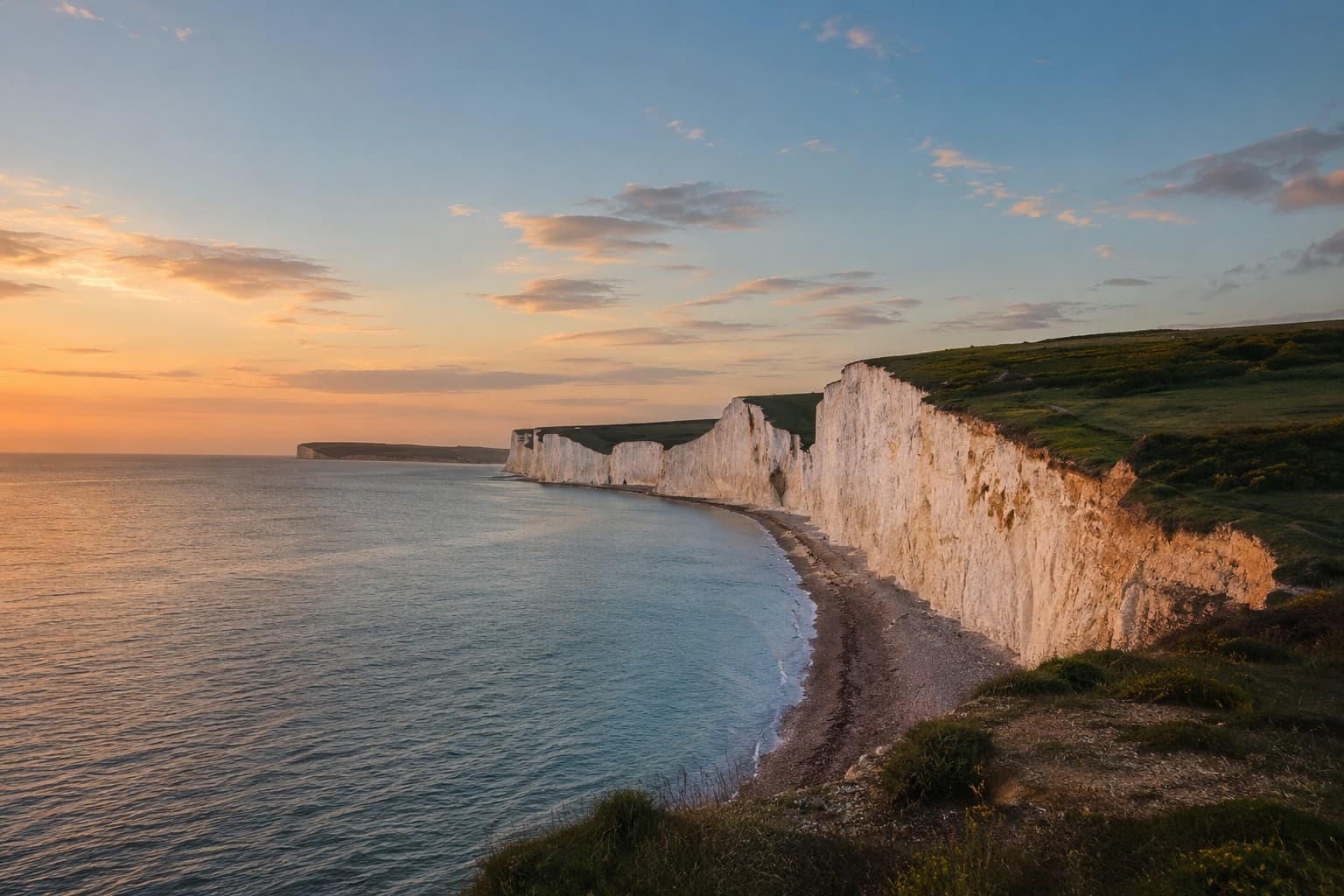
Before the crossing, the White Cliffs of Dover give the trip its send-off, the chalk faces rising over 100 metres above the Channel and stretching along the Kent coast. Arriving early for your crossing leaves time to walk a stretch of the cliff path, take in the view toward France on a clear day, and visit the South Foreland Lighthouse or the wartime tunnels beneath the cliffs.
It is a fitting threshold, the last of England before the Continent, and a far better use of pre-crossing time than the terminal car park. From here the tunnel or the ferry carries you across, and the open roads of northern France begin at Calais, with Normandy the first great region to the south-west.
Exploring Normandy
Heading south-west from Calais, Normandy unfolds as a region of orchards, half-timbered towns, and a coastline heavy with history. The cathedral city of Rouen, where Joan of Arc was tried and executed, rewards a wander through its medieval centre, and a short detour reaches Giverny, where Monet’s garden and water-lily pond still bloom as they did in his paintings.
The region’s most moving sights are the D-Day landing beaches, Utah, Omaha, Gold, Juno, and Sword, where the Allied invasion of 1944 began, with the American Cemetery above Omaha and the museums at Arromanches and Caen telling the story. The Bayeux Tapestry, nearly a thousand years old and seventy metres long, hangs nearby and tells an older invasion story in the other direction. Normandy’s cider, Camembert, and seafood make the eating as memorable as the history, and the coast road between the beaches is a gentle, contemplative drive. From here the coast leads to one of France’s most photographed silhouettes.
The Iconic Mont Saint-Michel
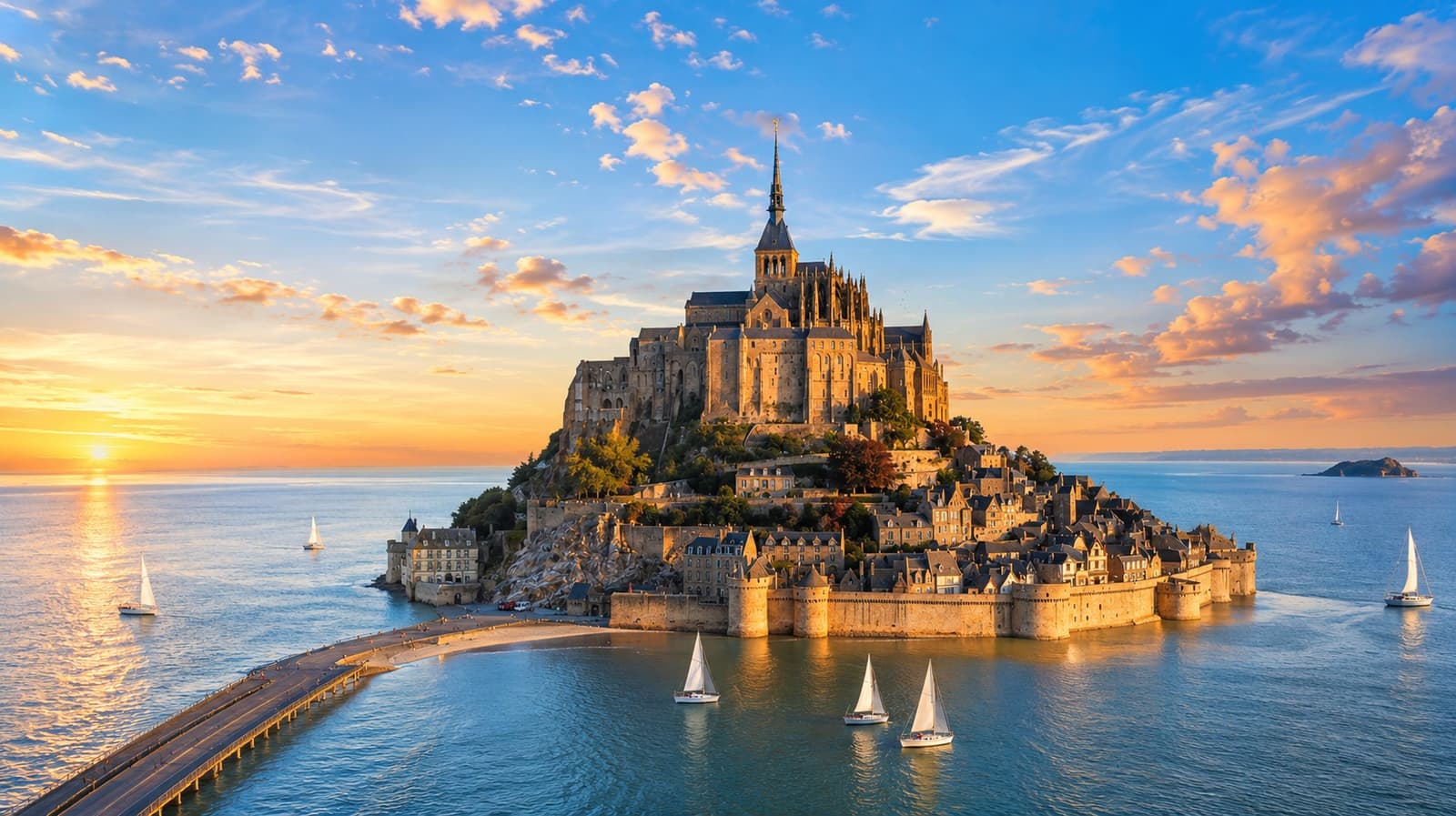
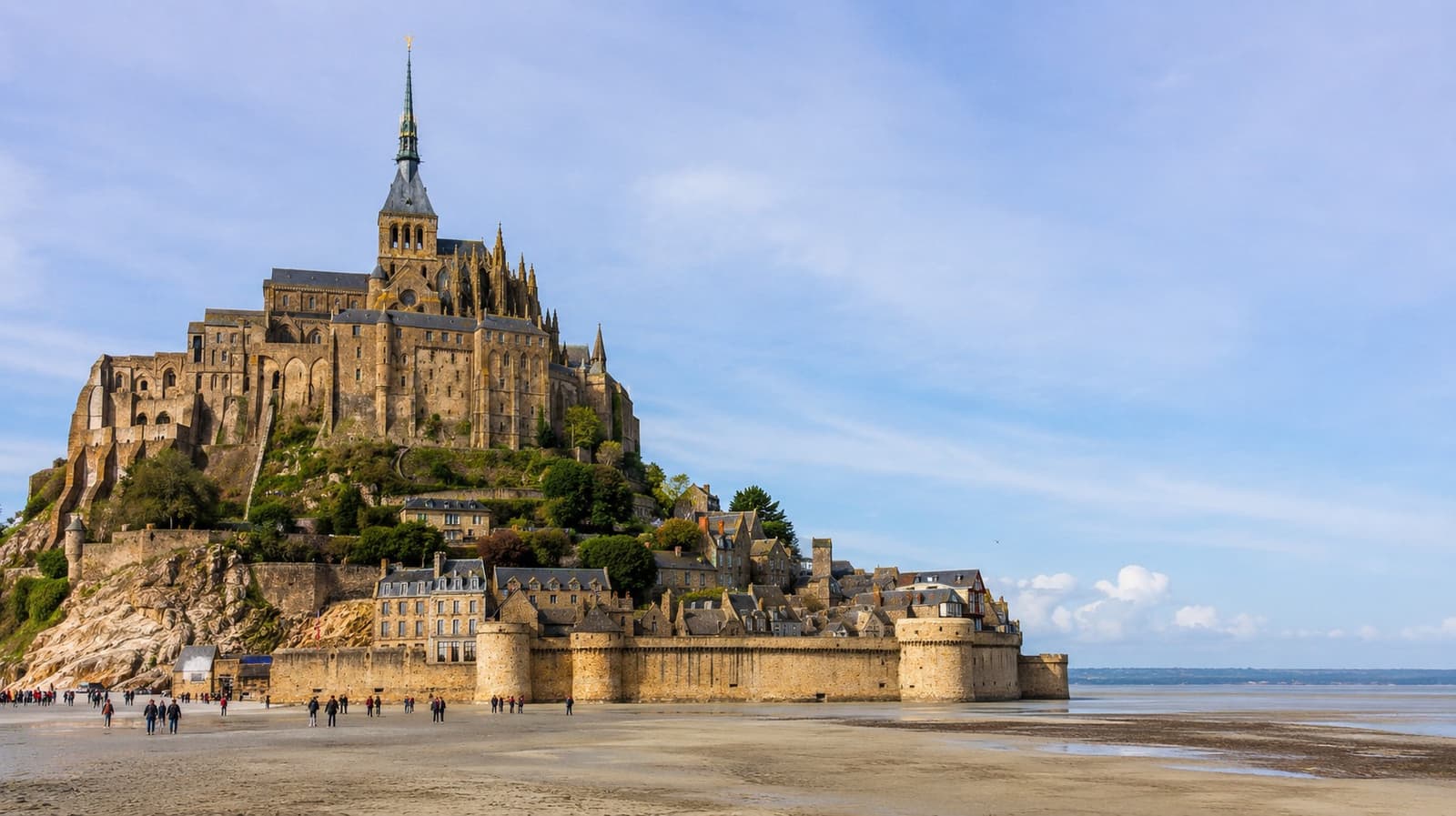
On the border of Normandy and Brittany, Mont Saint-Michel rises from the tidal flats like something from a fairy tale, a medieval abbey crowning a rocky island, ringed by some of the highest tides in Europe. It draws around three million visitors a year, and for good reason: the approach across the causeway, the climb through the narrow medieval streets, and the Gothic abbey at the summit are unforgettable.
Time your visit around the tides, which can transform the surrounding sands to sea with surprising speed, and consider arriving early or staying late to see the mount without the midday crowds. It is a detour from the most direct southern route, but few who make it regret the miles. Turning inland, the next region is the green heart of France.
Chateaux of the Loire Valley
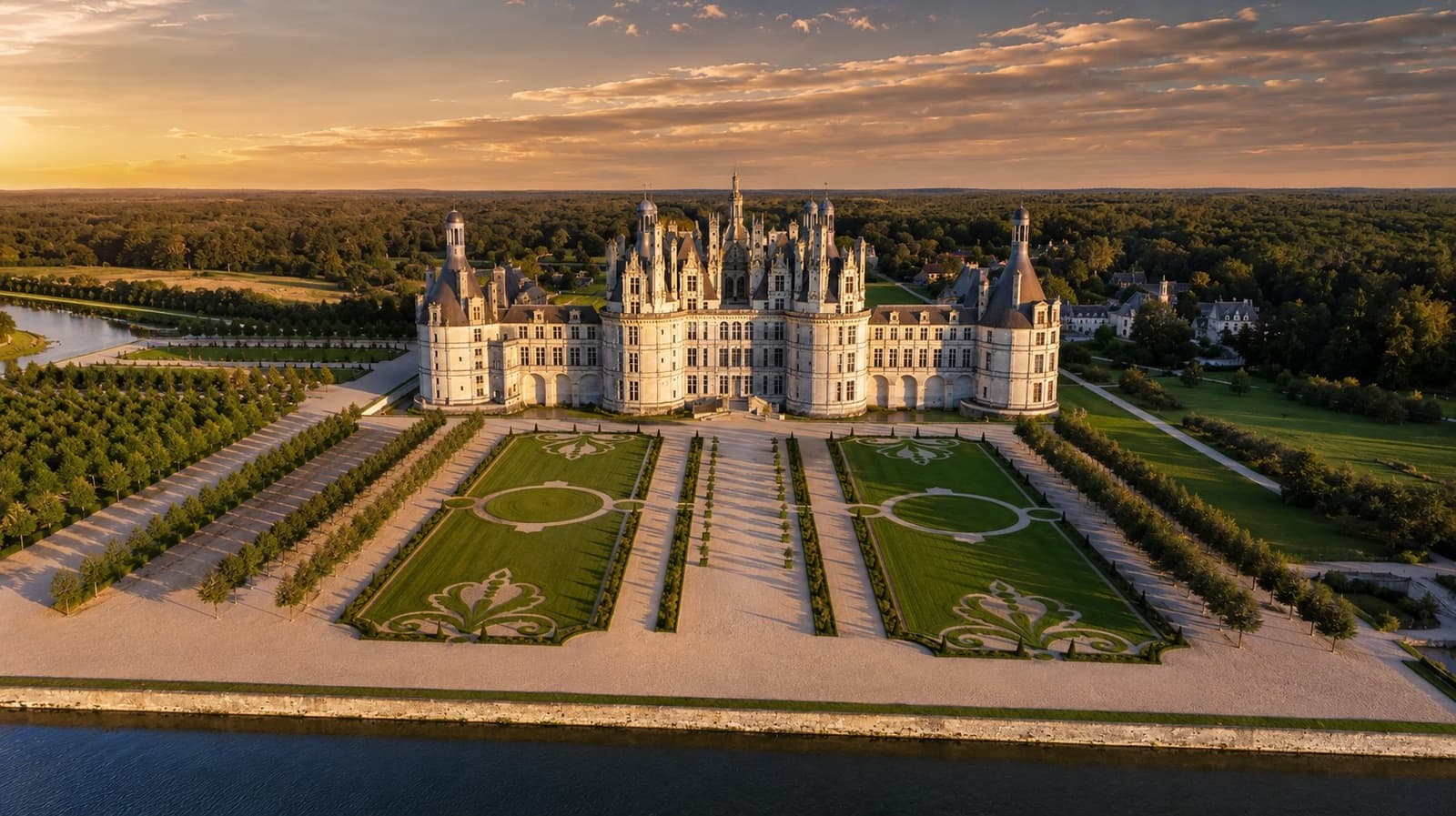
The Loire Valley, the “Garden of France,” strings together the country’s most spectacular chateaux along its broad river, a UNESCO World Heritage landscape of Renaissance palaces and vineyards. Chateau de Chambord, with its double-helix staircase attributed to Leonardo da Vinci and its forest of rooftop turrets, is the grandest, while Chenonceau arches gracefully over the river itself.
The gardens of Villandry are among the finest in Europe, and the region’s wines, from Sancerre to Vouvray, reward an unhurried tasting. The Loire is flat, gentle driving country, ideal for ambling between castles with stops for long lunches. South and east from here, the landscape and the light begin to change toward the Mediterranean.
The Majestic French Riviera
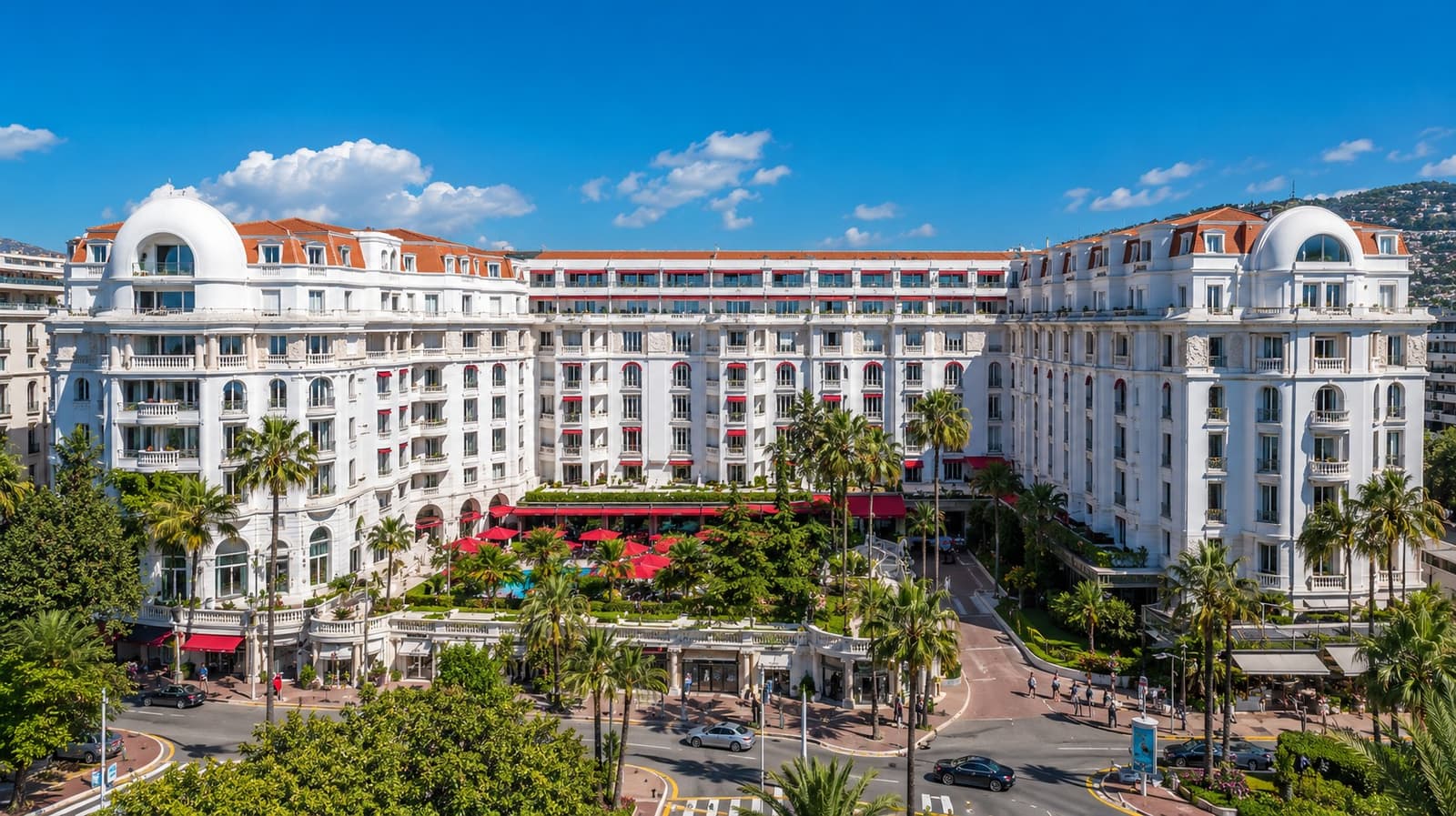
The French Riviera, the Cote d’Azur, is the glamorous reward at the far end of a southern road trip, a coastline of turquoise sea, cliff-top corniches, and resort towns that have drawn the wealthy and the artistic for over a century. Nice anchors the coast with its Promenade des Anglais and old town, Cannes carries its film-festival glitter year round, and tiny Saint-Paul-de-Vence perches inland as a medieval village turned artists’ haven.
Driving the corniche roads above Monaco, with the sea far below and the mountains behind, is one of the great European drives. The three corniches, the Basse, Moyenne, and Grande, each offer a different perspective on the same stretch of coast, the highest giving views that reach for miles on a clear day. The Riviera is also the point where a road trip can become a destination in itself, with enough coastline and hill villages to fill a week. Just inland lies a region of a different, quieter beauty.
Journeying through Provence
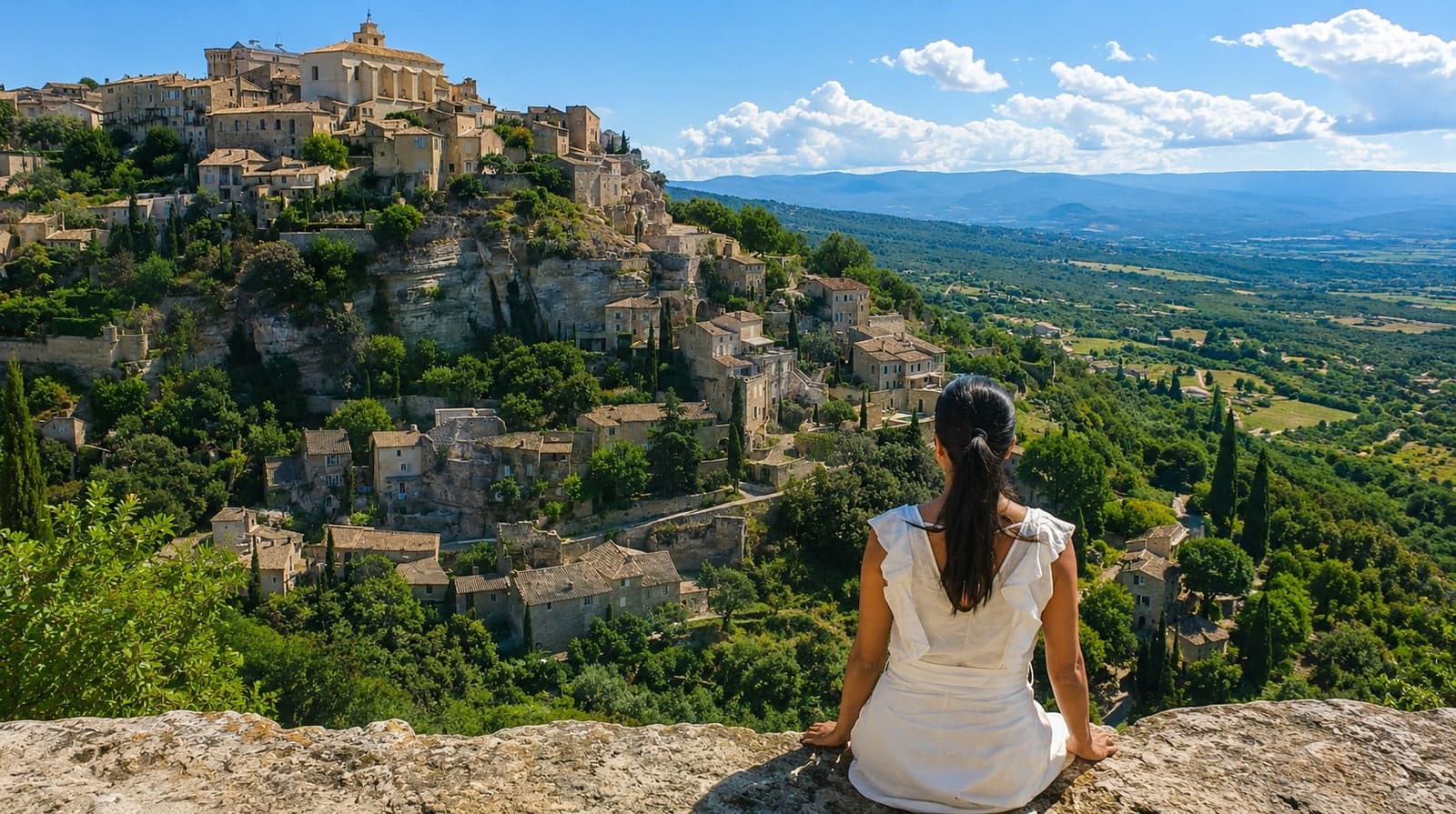
Provence is the France of postcards, all lavender fields, hilltop villages, Roman ruins, and markets piled with olives and herbs. The elegant city of Aix-en-Provence, with its plane-shaded boulevards and fountains, makes a fine base, while the Verdon Gorge, Europe’s grandest canyon, offers turquoise water and dizzying cliff roads for the more adventurous driver.
The lavender of the Valensole plateau peaks in July, the Roman aqueduct of the Pont du Gard astonishes, and the food, from bouillabaisse to ratatouille, is reason enough to linger. Provence rewards slow driving and frequent stops more than any region on this route. Whether you end here or loop back north, no French journey feels complete without its capital.
A Taste of Paris
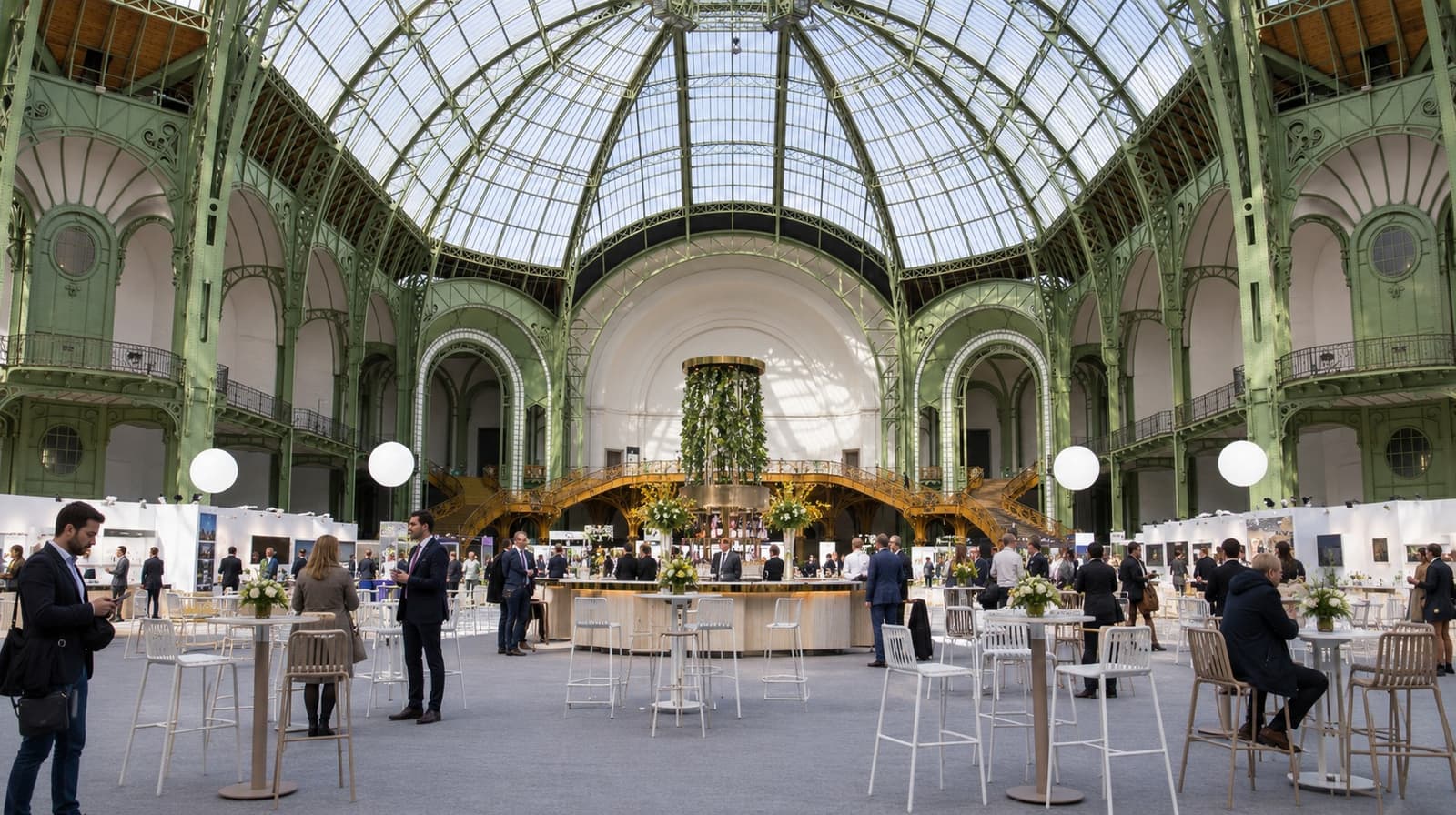
Paris is the natural bookend to a French road trip, whether you save it for the end or visit on the way south. The Eiffel Tower, the Louvre, Notre-Dame, and the boulevards and cafes need no introduction, and a few days walking the banks of the Seine, climbing Montmartre, and eating well is the perfect counterpoint to the open road.
Driving in central Paris is not for the faint-hearted, with dense traffic, complex one-way systems, and the swirling Arc de Triomphe roundabout, so many visitors park on the edge and use the Metro within the city. Paris also sits inside a low-emission zone, which brings us to the practical side of the trip, where a little preparation saves a great deal of trouble.
Practical Essentials and the Rules That Changed
The legal requirements for UK drivers in France changed after Brexit and again in 2026, and the old advice circulating online is often wrong, so this is worth getting right. You drive on your full UK photocard licence, and contrary to a common myth you do not need an International Driving Permit for France. You must carry your physical licence, your passport, your vehicle log book or V5C (or a letter of authority if the car is not yours), and proof of insurance, since most UK policies include EU cover but you should confirm yours. The old green card is no longer required.
Your car must display a UK sticker on the rear, unless your number plate already carries the UK identifier, the GB sticker having been retired. By law you must carry a warning triangle and a reflective hi-vis jacket for every occupant, stored inside the cabin rather than the boot so you can put one on before stepping out, and fit headlamp beam deflectors so your lights do not dazzle oncoming traffic. The single most overlooked item is the Crit’Air clean-air sticker: since January 2026 every French city with a population over 150,000 operates a low-emission zone, so any urban driving, including Paris, Lyon, Nice, and Marseille, requires one, and Paris now bans the most polluting Crit’Air 3 vehicles on weekdays. Order it from the official French Crit’Air website weeks ahead, as it can take time to arrive, and fines for driving a zone without one run from around 68 to 450 euros.
At the Border and on the Road
Since 10 April 2026 the EU’s Entry/Exit System (EES) is fully operational, replacing the passport stamp with a digital record of entries and exits for UK and other non-EU visitors. On your first crossing you may have your fingerprints and photograph taken at the border, there is no application or fee beforehand, but you should allow extra time, as queues at Dover, Folkestone, and the French side have been longer while the system beds in. Your passport must be valid for at least three months beyond your planned return and have been issued within the last ten years.
On the road, remember to drive on the right, give way to traffic from the right where signed, and observe the speed limits, which drop in rain, typically 130 km/h on autoroutes, 80 to 90 on rural roads, and 50 in towns. Most autoroutes are toll roads, payable by card at the barriers or via an electronic tag, so keep a card handy. Using a handheld phone is illegal, the drink-drive limit is lower than in England, and an unofficial but sensible kit includes water, snacks, and a charged phone with offline maps. With the paperwork sorted, the driving itself is a pleasure.
How long does it take to drive from the UK to France?
The Channel crossing takes 35 minutes by LeShuttle or about 90 minutes by ferry, then driving time depends on your destination. London to Calais plus the crossing is roughly two hours, London to Paris around six to seven hours in total, and reaching the Riviera or Provence is a full two-day drive with an overnight stop.
Do I need an International Driving Permit to drive in France?
No. UK licence holders do not need an International Driving Permit for France, contrary to a widespread myth. You drive on your full UK photocard licence, which you must carry along with your passport, vehicle log book or a letter of authority, and proof of insurance.
Do I need a Crit’Air sticker?
Almost certainly, if you drive in any city. Since January 2026 every French city over 150,000 people has a low-emission zone requiring a Crit’Air sticker, including Paris, Lyon, Marseille, and Nice. Order it from the official Crit’Air website weeks before you travel, as fines for driving a zone without one reach several hundred euros.
What documents and equipment must I carry?
You must carry your UK photocard licence, passport, V5C or letter of authority, and insurance proof, and the car must display a UK sticker unless the plate has the UK identifier. Compulsory equipment includes a warning triangle, a hi-vis jacket for every occupant kept inside the cabin, headlamp beam deflectors, and a Crit’Air sticker for city driving.
What is the EES and does it affect me?
Yes. Since 10 April 2026 the EU Entry/Exit System (EES) records UK travellers’ entries and exits digitally, replacing the passport stamp. There is no advance application or fee, but on your first crossing your fingerprints and photo may be taken at the border, so allow extra time for longer queues while the system settles.
Are there tolls on French roads?
Yes. Most French autoroutes are toll roads, with payment by card at the barrier or via an electronic tag, and a long southern drive can run to a significant total. Keep a card accessible, and note that slower national roads, the routes nationales, are toll-free if you have time to spare and scenery to enjoy.
Can I rent a car in the UK and drive it to France?
Usually yes, but check with the rental company first, as not all permit cross-Channel travel and some charge a fee or require advance notice. You will need the rental agreement showing you are authorised to take the car abroad, plus the standard documents and France’s compulsory equipment.
Can I hire a chauffeur to drive me from London to France instead?
Yes. A long-distance chauffeur can drive you from London through the tunnel and on to Paris or beyond, handling the crossing, the tolls, the navigation, and the French driving rules while you relax. This suits travellers who want the road trip without the logistics, or who would rather arrive rested.
Booking a chauffeur starts on westwayride.com or by phone on +44 20 8044 0939, with a fixed-price quote in seconds.